
← Aircraft by Brand & Model: Airbus Helicopter Series
Airbus H225 Insurance
Coverage guidance for offshore transport, search and rescue, aerial work, and passenger operations
Get coverage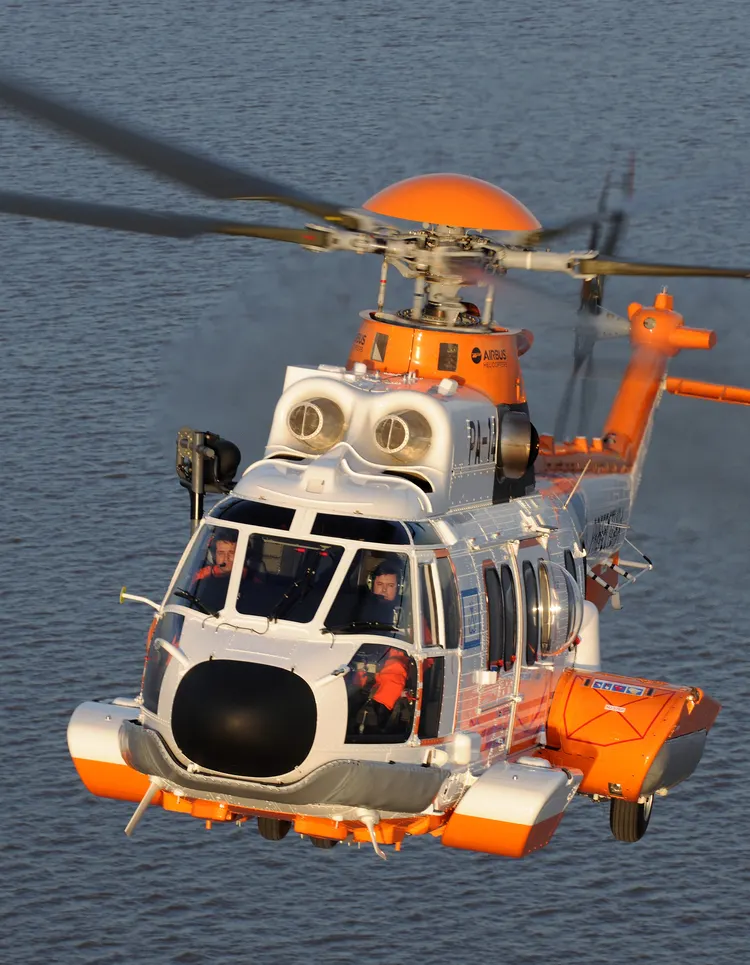
Explore Airbus H225 coverage
Insurance for a Heavy Twin-Engine Helicopter
The Airbus H225 carries passengers and equipment on long-range missions. For example, operators use it for offshore transport, search and rescue, aerial work, and government service.
Because those jobs involve different risks, H225 helicopter insurance should match the aircraft’s use. For example, lifting an external load calls for different coverage than carrying offshore passengers.
Get an Airbus H225 Insurance QuoteAircraft overview
H225 Design and Key Features
Two Safran Makila 2A1 engines power the H225. The aircraft can take on several roles because of these features and available systems:
- Multi-Role Cabin: Seating and equipment can change with the mission.
- Four-Axis Autopilot: Pilot assistance supports offshore approaches and rescue operations.
- External-Load Capability: Airbus lists a maximum cargo sling load of 4,750 kilograms.
- Mission Options: Search and rescue aircraft can carry hoists, searchlights, and other specialized equipment.
However, available equipment does not describe every individual H225. Owners should identify the systems installed on their aircraft.


H225 key advantages
Capacity for Demanding Missions
The H225 pairs passenger space with range and lifting capability.
Range
Airbus lists a maximum range of 459 nautical miles with standard fuel tanks at sea level.
Cruise Speed
Airbus lists a recommended cruise speed of 142 knots.
Cabin Volume
The H225 offers about 547 cubic feet of internal volume.
Passenger Capacity
Passenger layouts can carry up to 19 people, depending on the aircraft’s configuration.

Cabin and passengers
A Cabin That Fits Different Roles
Offshore operators may use the H225 to carry crews to distant installations. A search and rescue operator may instead reserve cabin space for rescue equipment and people needing help.
Private and government configurations can use different seating and interior finishes. Because layouts vary, the operator should account for installed equipment when setting the aircraft’s insured value.
Passenger arrangements also matter for liability coverage. Because those passengers differ by mission, the quote should explain who travels aboard and why.
Flight deck
Autopilot and Mission Flying
The H225’s four-axis autopilot helps crews manage demanding flights and precise hovering. Airbus also offers functions for offshore approaches and search and rescue work.
However, the equipment and procedures that matter most depend on the mission. An offshore crew needs different training and operating details from a team performing aerial work.
Give underwriters the aircraft’s avionics and pilot training records. Also describe the environments in which the crew will fly.


Operating roles
Insure the H225 for Its Actual Work
Operators use the H225 for several kinds of work. Tell an insurer which of these activities your aircraft performs:
- Offshore Transport: Identify passengers, helidecks, routes, and overwater equipment.
- Search and Rescue: Describe hoists, rescue crews, search gear, and patient transport.
- Aerial Work: Explain external loads, lifting equipment, and work sites.
- Private or Government Flights: Describe passengers, operating areas, and cabin upgrades.
For example, external-load work involves different risks from a medical transport mission. Policies should reflect every activity the operator plans to perform.
Insurance considerations
How H225 Operations Affect Coverage
The H225’s mission can change its crew, equipment, and liability exposure. Because of this, underwriters need more than its make and model.
An offshore operator should describe flotation gear and overwater routes. A utility operator should also explain cargo hooks, external loads, and the work it performs.
Owners should review hull insurance with the value of installed mission systems in mind. Passenger and public liability terms should also match the operation.


Preparing a quote
Gather the Details for H225 Coverage
Before requesting a quote, gather these details about the aircraft, pilots, and planned flights:
- Aircraft: Year, registration, proposed value, cabin layout, avionics, and mission equipment.
- Pilots: Qualifications, H225 time, recent training, and mission experience.
- Operations: Flight hours, operating areas, passengers, offshore routes, and external-load work.
Because each operator uses the H225 differently, clear information helps underwriters assess its work.
Ready to get started?
Build Your Airbus H225 Insurance Program
Aero Insurance helps H225 owners and operators compare aviation underwriters through one streamlined submission.
Whether the aircraft carries offshore workers, rescue crews, passengers, or external loads, coverage should match its actual use.
Start My Airbus H225 Quote