
Kawasaki Heavy Industries Helicopter Insurance
Explore Kawasaki’s helicopter heritage and coverage considerations for civilian operators
Get coverage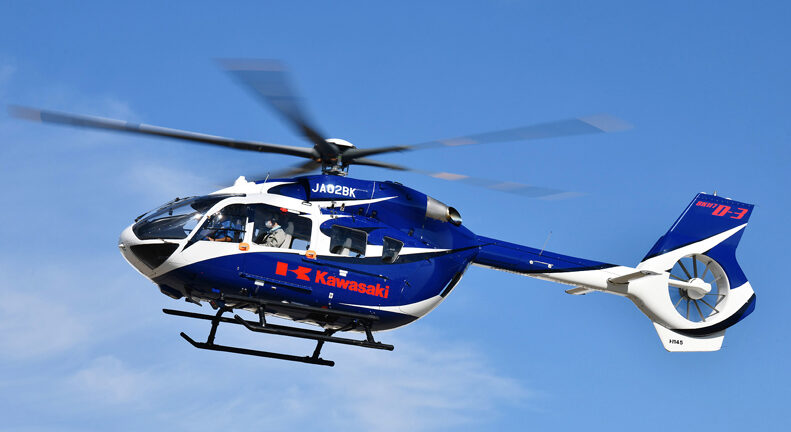
Kawasaki Heavy Industries helicopters
An Aerospace Manufacturer with Rotorcraft Experience
Kawasaki Heavy Industries develops and manufactures aircraft across several aerospace programs. Its helicopter work includes the civilian BK117 and aircraft produced for Japan’s defense forces.
For civilian owners, helicopter insurance begins with the aircraft, its pilots, and its actual use. For example, a BK117 carrying patients has different equipment and operating needs from one supporting a news crew.
Because Kawasaki’s wider helicopter portfolio includes military aircraft, identify the exact model and operation when requesting coverage.
Request Kawasaki Helicopter CoverageManufacturer background
From Aerospace Engineering to Helicopter Production
Kawasaki has worked on both civilian and defense helicopter programs. Its portfolio includes the BK117, the OH-1 observation helicopter, and production work involving the CH-47 and MCH/CH-101.
However, those aircraft serve very different operators and purposes. On this page, the BK117 provides the relevant civilian example; the defense programs illustrate the breadth of Kawasaki’s aerospace work.
Kawasaki developed the BK117 with Messerschmitt-Bölkow-Blohm, a predecessor of Airbus Helicopters. That partnership continued as the BK117 family evolved into later H145/BK117 variants.


Civilian insurance considerations
Coverage Starts with How You Fly
A Kawasaki helicopter’s configuration and mission give underwriters a clearer picture than its manufacturer name alone.
Aircraft
The model, variant, condition, hull value, and equipment all matter.
Pilots
Experience, recent flying, and model training help define the proposed crew.
Mission
Medical transport, public safety, and media work create different operating profiles.
Operating Area
Routes, landing sites, and annual flight hours affect the insurance review.

Explore a Kawasaki model
The BK117 Helicopter
The BK117 is Kawasaki’s jointly developed, twin-engine civilian helicopter. Operators use aircraft in this family for emergency medical services, firefighting, police work, news gathering, and transport.
However, the family spans several generations. Cabin space, avionics, equipment, and value can vary between an earlier BK117 and a later H145/BK117 aircraft.
See MoreAircraft configuration
Account for Mission Equipment
Two aircraft of the same model may carry different equipment. For example, a medical BK117 may have patient-care systems, while an observation aircraft may carry cameras.
Because installations can change an aircraft’s value, describe permanent and removable equipment in the insurance submission. Also identify gear owned by another organization.
Finally, provide the aircraft’s current cabin layout. This helps the insurer review the people and equipment carried during each planned mission.


Pilots and training
Present the Full Crew Profile
Underwriters review the qualifications of everyone who will fly the aircraft. Rotorcraft hours, turbine experience, time in the specific model, and recent training can all affect the review.
For example, a pilot moving into a BK117 from another helicopter may need transition training. The mission may also call for experience with particular environments or procedures.
If multiple pilots share the aircraft, provide each person’s history and intended role. This gives the insurer a more useful account of the operation.
Underwriting information
What Shapes a Helicopter Quote
Insurers look at the whole operation when assessing a civilian helicopter. The following details help explain the risk:
- Aircraft: Model, variant, year, value, condition, and modifications.
- Pilots: Experience, recency, qualifications, and training.
- Use: Each planned mission and the people or property carried.
- Operating Environment: Bases, landing sites, routes, and annual hours.
- History: Maintenance records and prior claims or incidents.
Additionally, describe any changes expected during the policy term. The insurer needs an accurate account of the work the aircraft will perform.
See What Affects Helicopter Premiums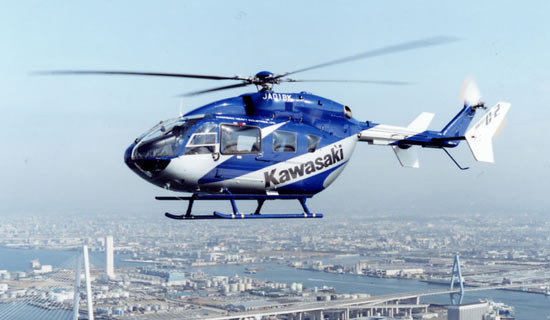

Coverage considerations
Build Coverage Around the Operation
A civilian helicopter policy may combine hull and liability coverage with terms for its authorized work. Because equipment and passengers differ by mission, the details need individual review.
For example, an operator may need to discuss medical installations, cameras, or other specialized gear. Lenders and contracts can also introduce requirements for limits or endorsements.
Review the proposed terms against the aircraft’s value, pilots, and planned use. This helps clarify which operations the policy addresses.
Explore Helicopter CoverageSpecialized missions
Explain Where and Why You Fly
Medical transport, firefighting, police work, and news gathering can involve different schedules, landing sites, and crew responsibilities. The BK117 is one civilian Kawasaki helicopter used across these roles.
For example, a medical aircraft may visit hospital pads, while a disaster-response aircraft may use temporary sites. Describe the actual mission instead of relying on a broad label such as “public service.”
Additionally, identify equipment such as medical systems, cameras, or hoists where applicable. Your broker can then review the proposed terms in the context of those flights.
Learn About Specialized Equipment Coverage

Preparing for a quote
Gather the Aircraft Details
Before requesting coverage for a civilian Kawasaki helicopter, gather the information an insurer needs to understand your operation:
- Aircraft: Registration, serial number, model, variant, year, value, and equipment.
- Pilots: Qualifications, helicopter time, model experience, and training records.
- Operations: Planned missions, passengers, operating areas, landing sites, and annual hours.
- Coverage: Desired limits, equipment needs, and lender or contract requirements.
- History: Maintenance information and prior losses or incidents.
Finally, note any planned changes to the aircraft or its work. Clear details help a broker present the operation to underwriters.
Request a Kawasaki Helicopter Quote