MD aircraft
Insurance Across MD Helicopter Models
MD helicopters serve private owners, public agencies, and commercial operators. For example, the twin-engine MD 900 can be configured for medical, public-service, and other passenger or specialized missions. By comparison, the single-engine MD 530F is known for work in hot, high-altitude conditions and serves law enforcement and utility operators.
Some owners know an early MD 900 by its McDonnell Douglas name. The Explorer line later became part of MD Helicopters. However, shared manufacturer history does not give every model the same insurance needs.
Because models and missions differ, MD helicopter insurance should reflect the specific airframe, pilot experience, equipment, mission, and operating environment. The model name is a starting point for the coverage discussion.
Explore MD helicopter coverageDifferent operations
MD Helicopters Serve Different Missions
Even within the same model, one operator’s work can differ considerably from another’s. For example, medical flights to hospital sites present different exposures from utility work in mountainous terrain. Tell the insurer which of these operations your aircraft performs:
- Emergency Medical Services: Patient transport may involve medical equipment, specialized crews, and varied landing locations.
- Law Enforcement: Patrol, observation, and agency missions can involve installed systems and distinct flight patterns.
- Utility and Aerial Work: Remote sites, low-altitude operations, or external loads require an accurate description of the work performed.
- Passenger Transportation: Private or commercial carriage places attention on passenger exposure, pilot qualifications, and liability limits.
- Search and Rescue: Specialized personnel, equipment, and challenging operating areas can affect underwriting.
Because missions differ, owners should describe all intended uses when requesting coverage.


MD helicopter operations
Two Models, Many Exposures
Together, the aircraft and its actual mission shape the insurance conversation.
Aircraft
Engine configuration, hull value, equipment, and condition vary by airframe.
Pilots
Insurers review recent experience, model time, ratings, and training.
Mission
Medical, passenger, law enforcement, and utility flights can present different risks.
Terrain
High-altitude work, remote sites, and confined landing areas deserve careful review.

The MD 900 Explorer
A Twin-Engine Aircraft with Distinctive Design
The MD 900 Explorer is a twin-engine helicopter with a NOTAR anti-torque system instead of a conventional exposed tail rotor. Depending on its configuration, it can support medical transport, law enforcement, search and rescue, and other missions.
For insurance purposes, an operator should provide the exact aircraft model, cabin layout, avionics, installed equipment, and maintenance history. Additionally, a medical interior or other mission equipment can change hull value and coverage needs.
However, the aircraft’s design is only part of the insurance review. Underwriters also consider how the operator flies and maintains it.
See MoreThe MD 530F
A Single-Engine Helicopter for Demanding Conditions
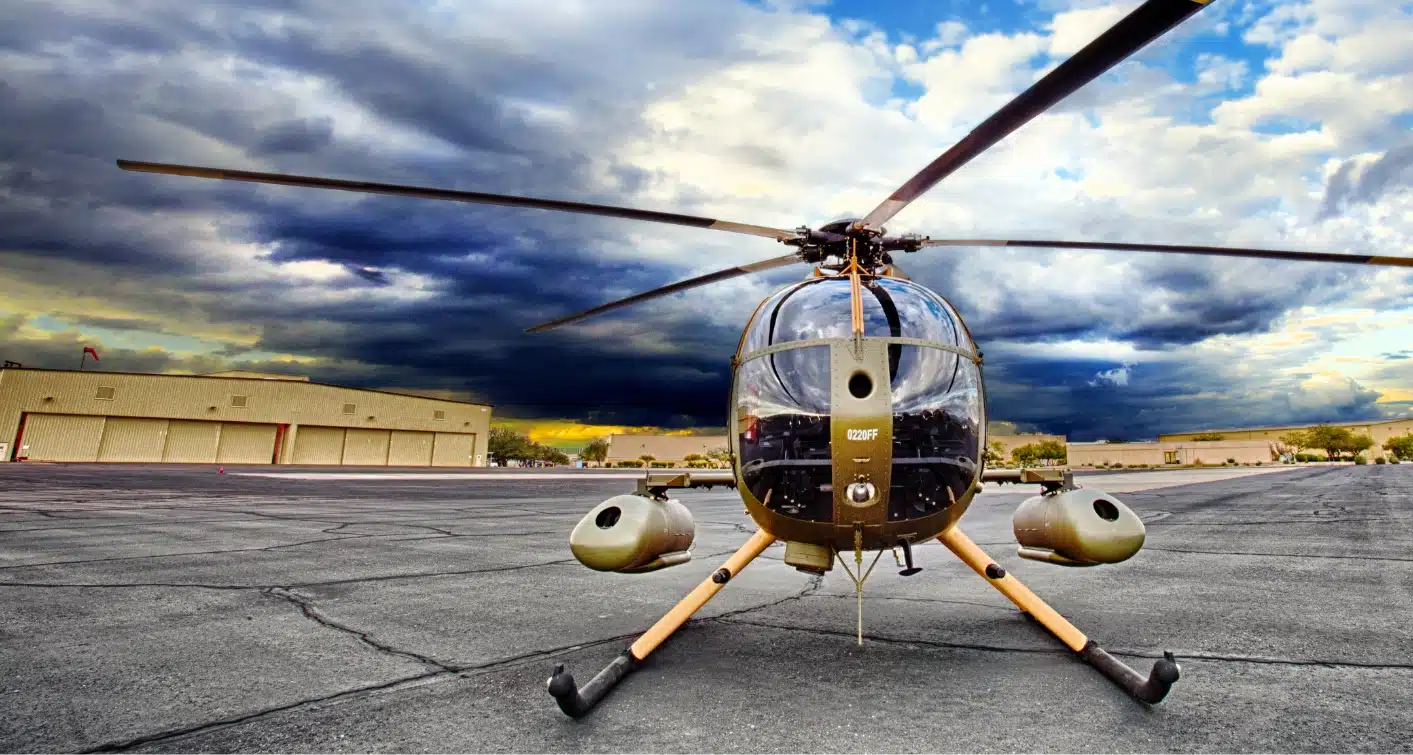
The MD 530F is a single-engine helicopter designed with hot-weather and high-altitude performance in mind. It can also be used for law enforcement, utility work, and other missions that call for a compact aircraft.
Its operating profile can differ from that of an MD 900. For example, aerial work around remote sites may bring terrain, landing-zone, and equipment considerations that do not arise in routine passenger flight.
Because these missions vary, tell the insurer about the work the aircraft will actually perform, including any external-load operations, specialized equipment, or contracted public-service use.
See More

Pilot experience
Why Model-Specific Training Matters
For both models, insurers commonly review total rotorcraft time, turbine experience, time in the specific make and model, recent flight activity, ratings, and recurrent training. Additionally, an MD 900’s twin-engine profile may lead to different pilot requirements from those for a single-engine MD 530F.
Depending on experience, a pilot transitioning to either aircraft may need additional training or supervised experience. However, requirements vary with the insurer, mission, and pilot’s background.
For operations with multiple pilots, provide the qualifications of everyone expected to fly the helicopter. This helps the underwriter assess the full operation.
The underwriting picture
What Underwriters Consider for MD Helicopters
Underwriters consider the aircraft together with its pilots and mission. In particular, they may review:
- Aircraft: MD 900 or MD 530F, year, serial number, hull value, configuration, avionics, and equipment.
- Pilots: Rotorcraft and turbine hours, relevant single- or multi-engine experience, make-and-model time, and training.
- Mission: Passenger, medical, law enforcement, utility, rescue, or other proposed use.
- Operating Environment: Terrain, altitude, landing sites, geographic area, and annual flight hours.
- Maintenance: Inspection records, component status, modifications, and the aircraft’s condition.
- Loss History: Prior incidents or claims and any corrective actions.


Coverage considerations
Building an MD Helicopter Insurance Program
Coverage should account for aircraft value and permitted use. Depending on the policy and mission, the program may address:
- Aircraft Hull: Physical damage coverage based on the helicopter’s insured value.
- Liability: Bodily injury, passenger liability, and third-party property damage arising from covered operations.
- Specialized Equipment: Medical interiors, observation systems, external-load gear, avionics, or other installed equipment.
- Mission-Specific Use: Policy terms that reflect the aircraft’s actual commercial or public-service operations.
- Financial Interests: Lender or lessor provisions when required by an agreement.
Specialized missions
When the Work Changes the Risk
An MD 900 configured for air ambulance service may carry a medical interior and operate at hospital landing sites. By contrast, an MD 530F used for utility work may fly in mountainous terrain or carry equipment for aerial tasks.
Because these operations differ, describe them in the insurance submission. Additionally, equipment and use should match the proposed policy terms. For example, a general description such as “commercial helicopter” may not tell an underwriter enough about what either aircraft does.
Learn about specialized equipment coverage

Preparing for a quote
Information to Have Ready
First, gather the details that describe the specific aircraft and its proposed operations:
- Aircraft Details: Model, registration, year, hull value, equipment, modifications, and maintenance status.
- Pilot Information: Rotorcraft and turbine hours, make-and-model time, ratings, and training records.
- Operating Plans: Mission types, geographic area, terrain, landing sites, and expected annual hours.
- Coverage Needs: Requested hull value, liability limits, equipment coverage, and contract requirements.
- Claims History: Previous losses or incidents and any corrective actions.
Finally, a broker can present the operation accurately to potential insurers.
Request MD helicopter coverage